

The Shirt Trend Giving Retail Collections a 2026 Makeover: Color Blocking Is Back
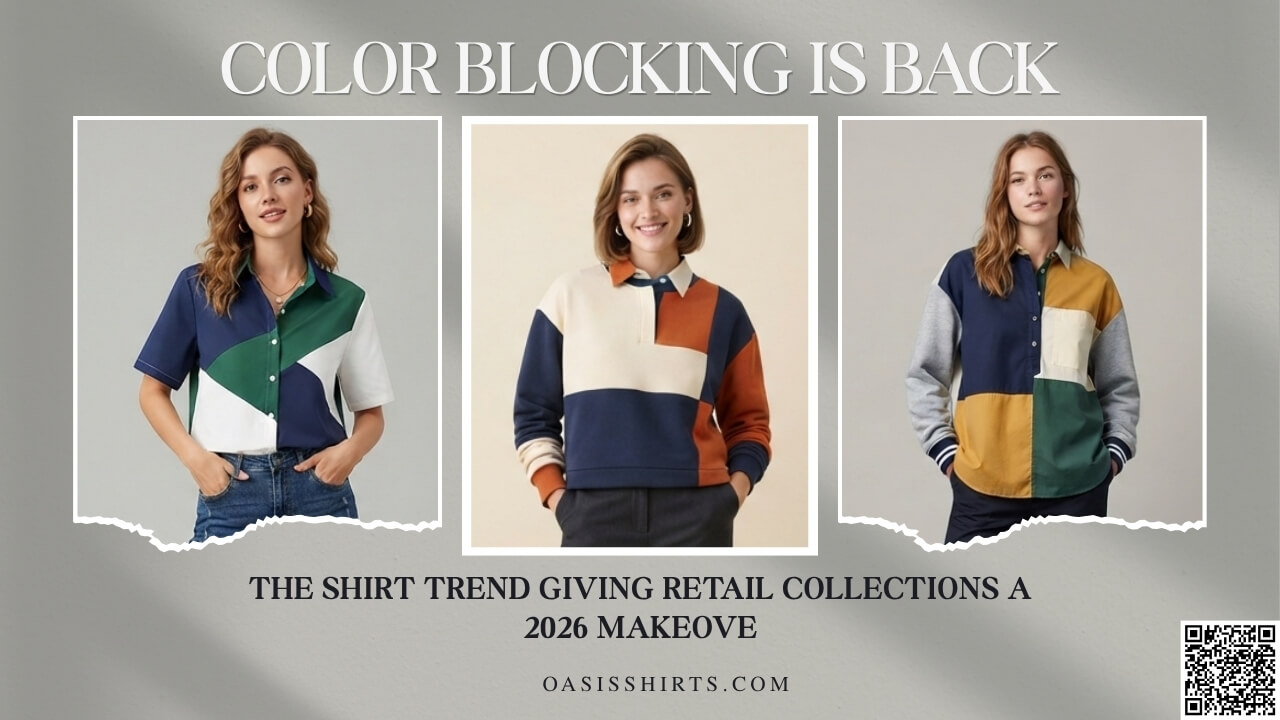
Attention is required for some fashion trends. Others merely make ordinary items appear more fascinating. Color blocking belongs solidly in the second group.
Color-blocked shirts can turn a familiar style into something fresh by purposefully blending two or more opposing or complementary hues. With panels, sleeves, collars, pockets, or geometric elements, a simple button-down shirt, bulky shirt, polo shirt, or casual t-shirt instantly gains individuality.
Why Color Blocking Should Be Considered by Brands in 2026
Customers are drawn more and more to fashion items that seem unique yet are nonetheless usable. Color blocking hits the perfect spot.
Instead of continuously introducing brand-new product categories, firms might utilize this strategy in 2026 to update current shirt categories. A changing color scheme can give a well-known silhouette a new identity.
Also, seasonal collections are a great fit for this style. Earthy hues work well with transitional wardrobes, while softer pairings can create a springtime-ready style. Deeper mixes can give autumn and winter collections a richer feel, while brighter contrasts can give summer drops vitality.
For businesses managing numerous launches throughout the year, this flexibility could be a huge benefit.
Popular Color Blocking Approaches
Color blocking does not have to include putting numerous bright colors on one shirt. It can be approached in a variety of ways.
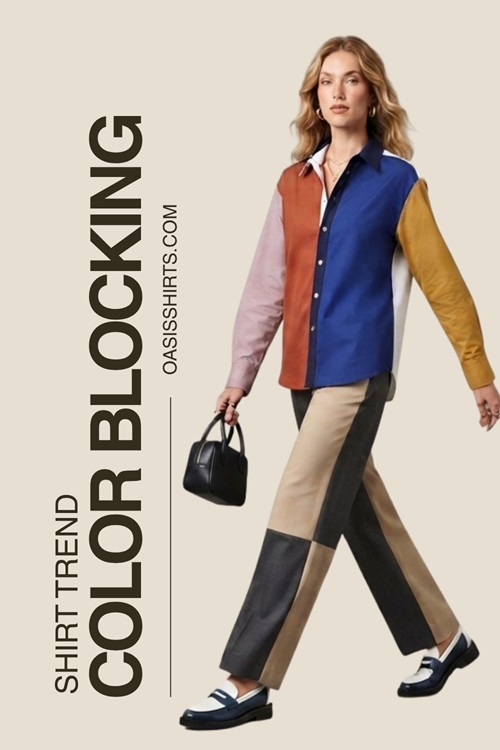
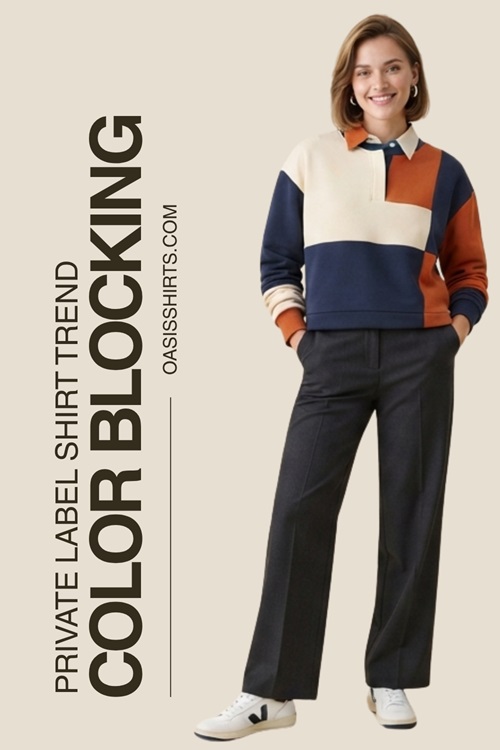
- Contrasting sleeves: A casual, athletic look is produced by wearing sleeves of various colors on a neutral body.
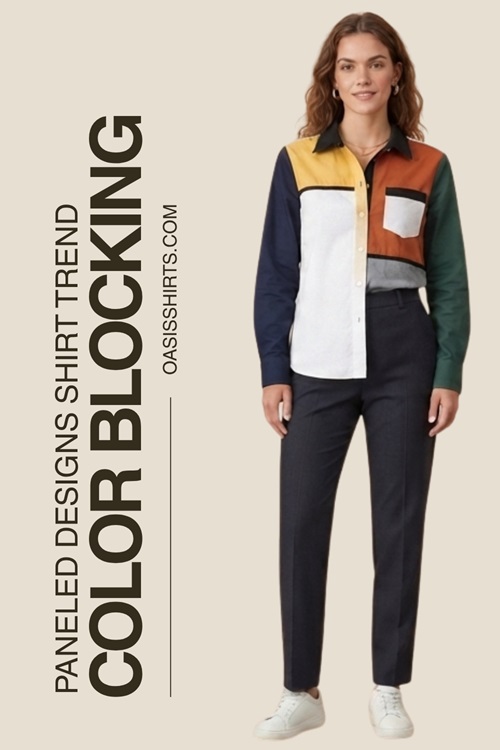
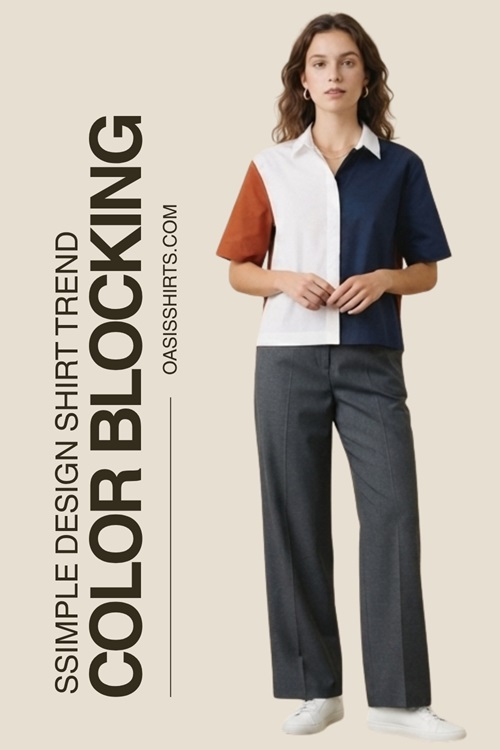
- Paneled designs: Shirts with horizontal or vertical panels might seem more structured and modern.
- Two-tone collars: A contrasting collar gives the outfit a slight tweak without becoming overpowering.
- Pocket accents: A pocket with a distinct color provides a subtle yet striking feature.
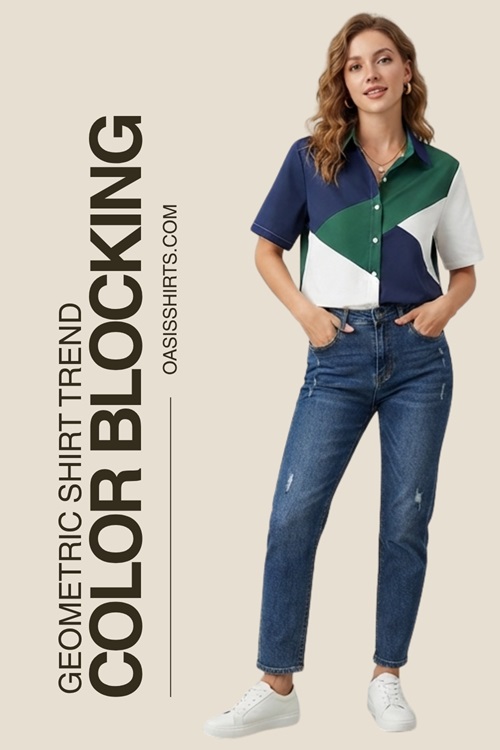
- Geometric blocking: The shirt feels more stylish when it has uneven or diagonal portions.
- Monochrome blocking: A sophisticated, subtle effect is produced by using different tones of the same color.
The target audience and overall aesthetic of the collection determine the optimal strategy.
Fabric and Color Placement Matter
Color blocking is about more than just the color palette. The fabric selection and fabrication influence the final shirt’s appearance and feel.
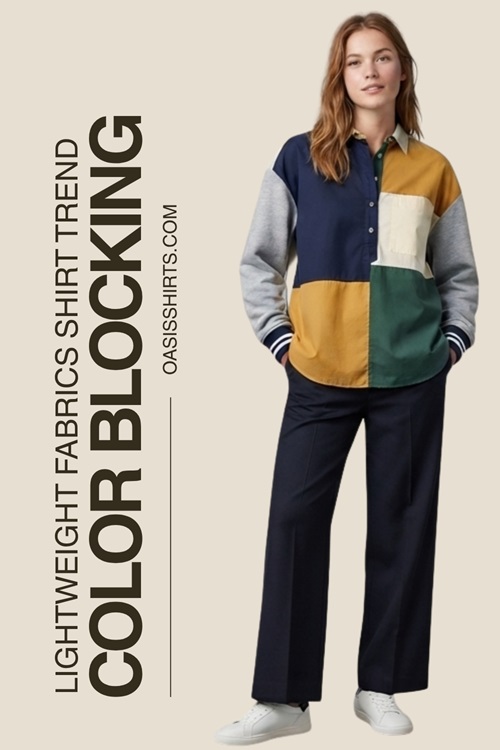
While heavier materials might make structural panels more noticeable, cotton can produce a simple, everyday look. Lightweight fabrics might be more appropriate for casual summer shirts and flowing designs.
Color placement is equally important. While horizontal parts typically result in a more relaxed look, vertical panels can give a streamlined visual impact. While modest collar or pocket details keep things subtle, contrasting sleeves might increase the garment’s sporting appeal.
Color Blocking and Private Label Collections
Color blocking provides ample creative differentiation opportunities for private-label businesses. Rather than creating a whole new garment, businesses might begin with commercially established shirt silhouettes and experiment with color placement.
Furthermore, this method can help in establishing a collection’s visual identity. A unified product narrative can be produced by repeating similar color schemes throughout shirts, jackets, sweatshirts, and other clothing categories.
How Color-Blocked Shirts Can Be Used by Retailers
Color-blocked shirts can be positioned by retailers in several merchandising areas.
An enormous geometric shirt would look good in a streetwear department, while a sporty two-tone pattern might go well with casual clothing with an energetic vibe. Customers seeking daily wardrobe elements with a bit more intricacy might find subtle tonal blocking appealing.
They can also be carefully placed in seasonal displays. A striking color combination can draw attention to a rack or storefront without requiring much styling.
Offering many colorways of the same design is another wise decision.
Avoid Making the Design Too Complicated
More color does not necessarily imply richer fashion.
The strongest color-blocked shirts typically have a distinct visual hierarchy. A garment may soon lose its feeling of balance if each panel, pocket, sleeve, and trim is a different tint.
Simple designs are sometimes simpler to promote, dress, take pictures of, and wear frequently. This is important for retailers since adaptable items are more likely to work with a variety of outfits and circumstances.
The objective should be obvious but not overbearing.
Business owners and retailers can turn these color-blocking concepts into commercially ready collections with the appropriate materials, finishes, colorways, and manufacturing possibilities by collaborating with reputable manufacturers and suppliers.